early education
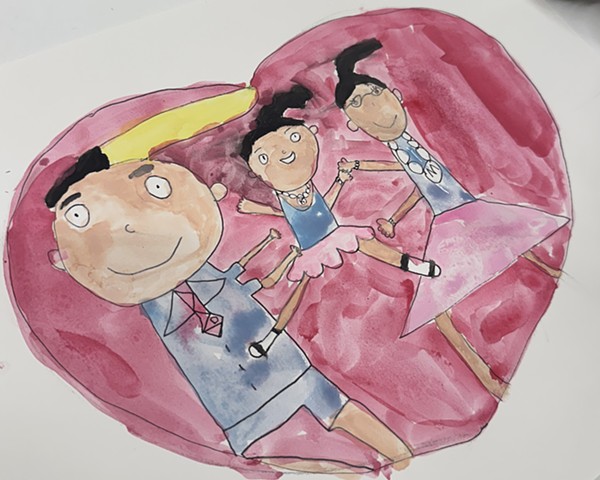
For years, my commitment to arts education has been grounded in one belief: technique matters, but what matters more is what students learn about themselves through making. I teach art as a way to strengthen social-emotional learning. Such as naming feelings, tolerating uncertainty, and practicing self-regulation. That’s why I tell my students I want to see the “imperfect” drafts: the risk-taking, the honesty, and the joy of being in process.
Implications & Research Directions
1. Process-oriented art education may act as an intentional intervention for social-emotional learning (SEL), cultivating self-awareness, emotional expression, resilience, and identity development.
2. This raises a clear hypothesis: the “imperfect draft” pedagogy → enhanced SEL outcomes (e.g., emotional regulation, self-reflection, social empathy) — a hypothesis that could be tested through qualitative or mixed-methods research (e.g., interviews, longitudinal classroom observation).
3. If validated, such an approach positions arts education not just as technical craft development but as a meaningful strategy for holistic development and educational equity, with scalable implications across diverse educational settings.